
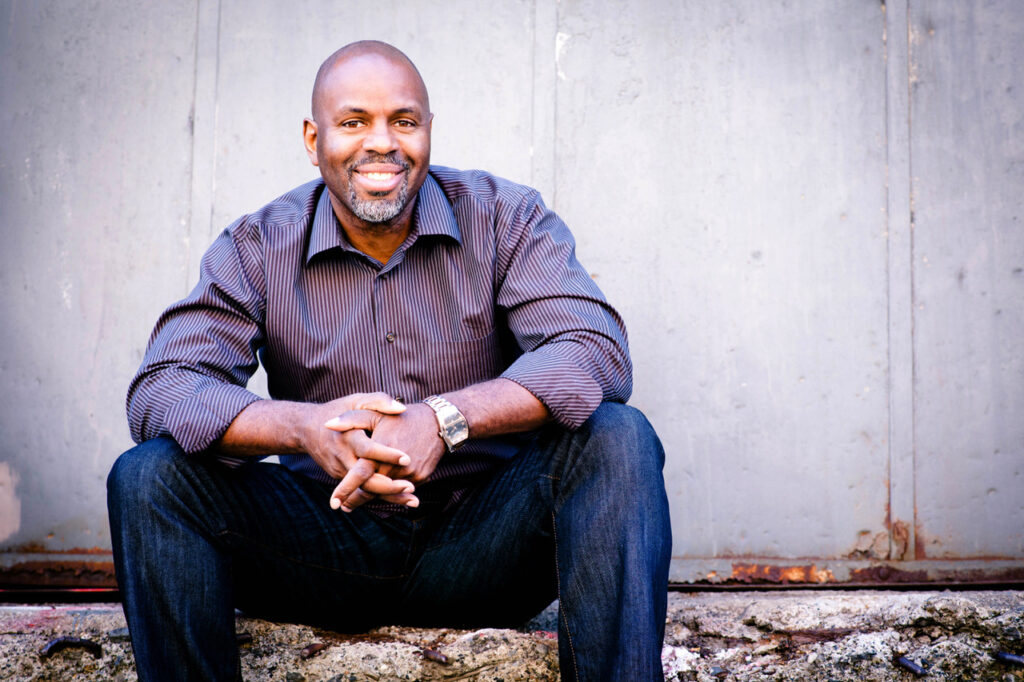
A BPM Artist Chat with Byron Hurt
FEBRUARY 2026
by Mandela Langhum
What pushed you to make this film? Was there any, like, impetus or something specific?
Wil DuBose, who is the director of Men of Courage, a program supported by the New Jersey Coalition to End Domestic Violence (NJCEDV), reached out to me. He told me about the program and thought it would make a really good documentary… I thought this was really interesting. It was also very much up my alley because for many years, I had done gender violence prevention work… I felt like I could bring the program to light by telling the story. So that’s how it all came together.
I noticed with the Atlantic City group, some people didn’t show up. Was that something that regularly happened? How prepared were you for people to not show up at all?
So, with Michael Cupeles and his faith-based group that he works with, that was the second time that we scheduled a shoot where no one showed up. That was particularly disappointing and frustrating; not just for us as a crew, but also for Michael. We just decided to make that the story. You know: that no one was willing to show up, despite his open invitations, to clergy and faith-based leaders.
We were not prepared for that but, you know, when you’re making a film, you kind of have to roll with the punches and that’s what we did… We ended up using AI-generated images… We really wrestled with that, because: 1) it was my first time using AI-generated images to help illustrate Michael’s segment because we had very little footage to use. Since this was not a film for national television broadcast, I had more leeway to just kind of take some creative risks. So that’s what I did. It was an opportunity for me to just try new things out.
When you had the one-on-ones with the liaisons, some of them sat on top of the red couch in the studio. Was that their personal choice, or was that, like, your artistic choice?
That was my artistic choice. I wanted to use the red couch as a motif for the conversation with the liaisons, sort of like the symbol or and a metaphor for the men coming together to share their own personal stories, but also share the work that they do. Red conveys our strength and courage. And I did not want each one of them to sit in the same location. I wanted each one of them to have their own respective spot on the couch representing the different cities in New Jersey that they represent… So it was very intentional.
I definitely noticed the intimate atmosphere that you created that allowed them to really open up, because a couple of them did shed tears when they were retelling their stories and their experiences. Could you elaborate on how you made such a comfortable atmosphere for them to get that out?
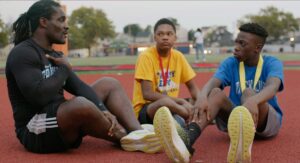
I think it’s important to note that these sit-down interviews that we filmed weren’t the first interactions that I had with the men. I had several phone calls with them, I had pre-interviews with them, and I also went out to each one of the locations, except for Michael’s location (Atlantic City).
I went out to each one of the locations just to do a site visit and to be a part of the group and to experience what they do, and experience the kind of conversations that they have. So, by the time we got to the sit-down interview I believe they felt comfortable with me, and I think they trusted me. When we got to the interview, it was just a matter of asking questions that would open them up to sharing their stories… The best way to get men to be honest and forthright about their own personal experiences — either witnessing gender-based violence, or perpetuating it themselves — is when they hear other men share their stories.
What were the demographics of your crew and how big was it?
We had a small, very diverse crew. One thing that was very important to me for this film is that I wanted as many Black men to work on this documentary as possible. So, my editor was a Black male, the cinematographers were Black men.
My assistant camera operators were a Latino man and an Asian woman. Many of the production assistants were Black or Latino …We had a couple of women. My producer is a Black woman. So, it was probably no more than 8 people. And we did our best to make sure that people were out of the room during the interviews, except for essential crew. ..That way, the men, the liaisons, the men of courage, would feel more comfortable sharing their stories.
Did you design an impact campaign for this film?
I did not but the NJCEDV will. They wanted to tell this story so that it would have a really big impact on boys and men — not just in the state of New Jersey, but around the country.
So, yes, there will be an impact campaign. NJCEDV will create the curriculum, and I will be advising them on the messaging and the training for the men of courage.
Is there anything you would like to say to other filmmakers who might want to take on similar topics?
I was really glad that this opportunity came my way. We’re living in an era and a time where we, as filmmakers, have to continue to document the world around us, particularly what’s going on in the United States today, in 2026. Filmmakers like me and other filmmakers, we are artists, and we’re the truth-tellers of our society. When you silence the voices of artists who are truth-tellers, you hide the truth. So I want young, emerging filmmakers to know and understand that you are important.
Lastly, is there anything specific, and then anything in general, that you want viewers to take away from this film?
 Men play an incredible role in reducing or ending all forms of gender-based violence… I thought it was really, really powerful that Alex Pretti’s final act of heroism was standing in defense of two women. I’m not suggesting… that we sacrifice our lives. …But we should be willing to stand up and defend the women, whether they’re our mothers, our sisters, our daughters, our grandmothers. … When we men remain silent in the face of [violent] behavior, we are allowing it to continue.
So, I just hope the film sends a message to more men — particularly Black and Brown men — that it takes courage to stand up and to speak out against all forms of violence against women. Men have the ability to do it and we should do it, because it’s the right thing to do.