
SEPTEMBER 8, 2026
BLACK PUBLIC MEDIA
WEEKLY DISPATCH
by Leslie Fields-Cruz
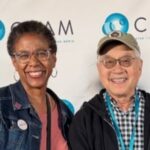
Several years ago, the former executive director of the Center for Asian American Media, Stephen Gong, suggested that I look into a group called PolicyLink. At the time, I was still a fairly new executive director. Suggestions about who to meet, how to conduct business, how to raise money, and how to find new board members came at me a mile a minute. I had to prioritize. Participating in a PolicyLink Summit wasn’t high on my list, but I did take note.
Fast forward to November 2025. I was invited to attend a summit at my alma mater, UC Berkeley, sponsored by the Goldman School of Public Policy. Angela Glover Blackwell, the founder of PolicyLink, was there leading a panel discussion on the Future of Civil Society. It was one of the more pertinent sessions for me because it spoke to my own belief in the important role community organizations play in creating a society that is inclusive, equitable and capable of participating in a democracy that represents all of us.
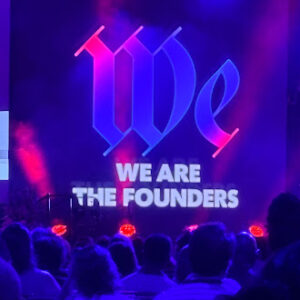
This spring, the opportunity to apply for a scholarship to attend PolicyLink’s 2026 Summit landed in my inbox. The summit’s theme, We Are the Founders: Writing the Unfinished Story of Our Democracy, piqued my interest. As a culture worker who has dedicated her career to public media, I knew storytelling should be part of this conversation. After all, who gets to tell our stories — and whose stories are preserved, funded, distributed, and made accessible to the public — has everything to do with who gets to be seen as part of the American story. I applied and was granted a scholarship to offset the $3,000 registration fee.
A Multifaceted Design
The PolicyLink Summit was unlike any I have ever attended. And I have attended MANY.
Held over five days, the summit consisted of panels, workshops and interactive experiences, but also presentations by musicians, spoken word artists, storytellers, and more. I even had a chance to stretch my creative writing and improv skills, working with a small group of attendees over the course of the week, to create and present a short skit during the final session.
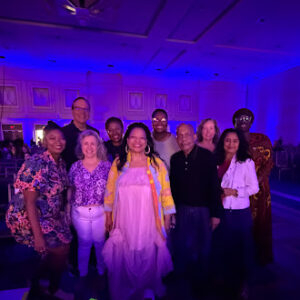
There were more than 2,000 attendees from a variety of work sectors — public and private, arts and culture, health, law, philanthropy, and more. I can’t be certain, but I wouldn’t be surprised if there were representatives from all 50 states and the U.S. territories colonies. It was as diverse as the America in which we live. Because if we’re going to work on the unfinished business of our democracy, then at least this time let’s ALL play a role in designing a democracy that works for everyone.
All attendees were assigned to a homebase, allowing us to meet with the same group of people throughout the summit and dive more deeply into questions about how to build a democracy that serves all. I was in the Arts and Culture homebase. As you can imagine, the ideas were plentiful. Some weren’t new: pay artists a living wage; ensure the arts are available to all children at every level of their education; significantly increase the minimum annual payout requirement for private foundations. But others were more aspirational: every U.S. city, town and village supports an artist — or artists — in residence; codify public arts funding at every level of government — federal, state, and local.
As I engaged in conversations with my homebase team, participated in workshops and listened to panelists and keynote speakers, my expectations of the summit began to shift. Yes, I learned something. Yes, I made connections. But I walked away with much more than knowledge and a longer contacts list.
Reimagining the Future of Arts & Culture Investment
I walked away not just thinking differently about the work I do, but with further confirmation that where my thinking has gone over the past few months has been spot on. That both my professional and community work can be part of building a democracy that truly serves all. Arts and culture must be valued for the return they provide to our communities. Not simply by how much revenue they generate, but by their ability to help us understand one another, preserve our histories, challenge dominant narratives, imagine different futures, and participate more fully in civic life.
That realization also has me thinking about public media and BPM’s place within it. For much of the past year, we’ve focused our energy on what was being lost and what needs to be preserved. But what if preservation isn’t the only question we should be asking? What if this moment also requires us to reimagine a public media system entirely? One that we envision 30 or 50 years from now? If we were founding public media today, who would we make sure was at the table? Whose stories would be considered essential to the public record? How would we fund it? Who would have access to it? And what institutions would we build to ensure that communities historically left outside of the American narrative have the power not simply to tell their stories, but to help shape the system through which those stories reach the public?
BPM at 50
Those questions feel particularly important to me as BPM approaches 50 years of supporting authentic stories about the global Black experience. Perhaps BPM’s role in this next chapter is not simply to survive the current threats to public media or preserve what we have built. Perhaps it is also to help imagine — and help found — what comes next. Because it’s not enough for us to complain about how things are being torn down before our eyes. We have to be courageous enough to see beyond this moment.
There’s a popular saying in the African American community: “We are our ancestors’ wildest dreams.” If that is true — and I believe it is — then what are OUR wildest dreams? What are we willing to imagine for people we may never meet and a future we may never see? And what work can we do in our lifetimes to move those dreams closer to reality?
I have a bunch of wild dreams. Tell me some of yours.
 Open Call Information Session is This Wednesday
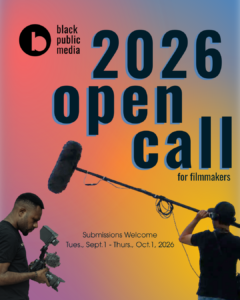
If you or someone you know is considering submitting a project to BPM’s Open Call, please plan to attend our information webinar tomorrow, Wed., Sept. 9 at 6 p.m. EST. Our staff will explain the Open Call submission process., what we’re looking for and how the selection process works. Five projects will be selected to each receive a $20K grant and a chance to pitch at at our 2027 PitchBLACK Forum next spring, where the strongest pitch will win up to $150K in production funding. Click below to register.