When did you decide to make a career out of documentary filmmaking? Was there a specific film or filmmaker that called to you?
I don’t define myself as a documentary filmmaker. I define myself as an artist who works in nonfiction. I have a background in experimental film and film strategy. I was trained in science. I did biology in high school. I was in a rigorous pre-med program. I was always going to go into STEM, but my senior year in college I realized I was a storyteller, and I decided to pursue that.
I got a fellowship to go to Europe and do photography! I was constructing narratives. I came back to the US after a year and a half and applied to New York film school. I was unsure if my work would fit into the industry and the marketplace, though, I got a job at Children’s Television Workshop then public television, so I was trained in public television which was like documentary training. After a few years, I attended art school in the form of the Independent Study Program of Whitney Museum of American Art to make experimental films.
You’ve been at this for a few decades now. How has your process of documentary filmmaking evolved over time?
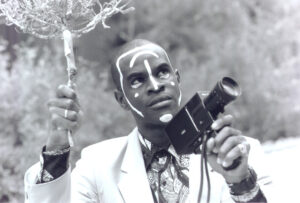
Each film is very different. I am interested in the process and including it in the film. I don’t make a division between filming and outreach. The films I make are deeply personal, and I’m in most of them. They involve participatory practice, and I involve non-actors. For example, in my upcoming film My Mom, The Scientist, I reached out to the university my mother worked for, and the school became a part of the film, from the faculty to some of the student filmmakers.
What are your secrets to pitching your ideas and fundraising for your projects?
You go to the community you’re working with and ask for their support. I am very close with those communities, and it’s important to cultivate relationships, not just make them purely transactional. People have funded me over time. I think people are very interested in investing in people. They need to know who I am. It’s a give and take. I have something of value, and I speak clearly about that. I network with other filmmakers and advisers and look outside the box, even at investors. I reached out to collectors of Black photographic artists, and they helped me secure funding at a critical point in the process of filming Through a Lens Darkly. My attitude is I’m going to make the film regardless.
The project you’ve been working on recently involves the story of your mother, Rudean Leinaeng, who I understand was a chemistry professor. The recent rescission of federal funding for that project must have come as a shock to you. How has it impacted your approach to completing My Mom, The Scientist?
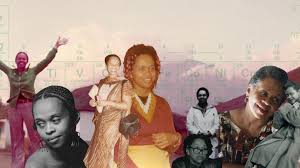
Thomas Allen Harris’ collage of his mother, Rudean
Our funding was terminated. We got a major grant from the National Science Foundation. It was in a few parts: 1) the film; 2) do major outreach involving science centers and storytelling around science in communities that are underserved; 3) a series of 30 shorts called Scientists in the Family; 4) a research project effectively looking at how we tell stories that are culturally sensitive. The last three things were all defunded! We are hoping to get into a festival to help us secure funding for the rest of the project. Most of my projects take around five years, and, when I started writing this in 2016, I did not foresee that science would be defunded in 2025. We took science for granted.
What do you see as the future of independent filmmaking in a world where streaming is king and where federal funding for documentaries like yours is virtually gone?
I don’t know. It’s a wide-open landscape. People have a desire for content. The marketplace is more friendly towards shorts, TikTok, for example, in such that it narrows people’s attention spans. It’s important to be open. People are monetizing on YouTube and Vimeo. With public television being defunded, we need to reassess what assumptions we had. It helped diversify the marketplace in so many different kinds of ways. Interesting times are ahead, and we should not be scared and be hopeful. See it as an opportunity.
What skills do you recommend emerging, independent filmmakers acquire to prepare for what’s ahead?
All of us should draw on our innate interests and proclivities. I am passionate about the projects I make. If I was not, there’s no way I could sustain them over time. Self awareness shows us who we are and what we like to do. Film is not necessarily defined as what the marketplace says it is. In that way, this is how we as filmmakers can be free. The world is only as limited as our imagination is. There’s a market for everything, once you find your audience. I control my narratives, and I’m giving my community another way of affirming our narrative. There’s nothing more powerful than that.
Any closing thoughts?
I’m very grateful to be able to tell the stories I tell, for the venues and financial support, for the large, international audience my work attracts, Berlin, Brazil, Japan, South Africa. I intend to keep those relationships up. This federal defunding will force us who have been overly reliant to reconceive our notions of public media.