
Angela Tucker
A BPM Artist Chat with Angela Tucker
MARCH 2026
by Mandela Langhum
When did you first learn about Barbara Jordan?
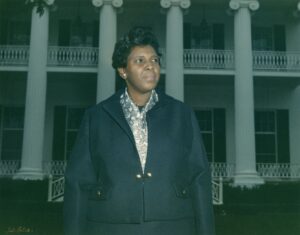
When I was growing up, she was a familiar figure. But the first time I really learned about her was while making these two other films about Black women and political power. One was called All Skinfolk Ain’t Kinfolk (2018), which Black Public Media funded. That film was about a runoff election between two Black women running for mayor. My archivist showed me the Watergate speech that Barbara Jordan delivered and I was completely blown away.
I didn’t really know who Barbara Jordan was back then, so I did some research. I was gonna do that thing where you’re just like: I’m just gonna watch the documentary and learn all about Barbara Jordan. And then I saw that that documentary didn’t exist — which wasn’t surprising, if you think about how many incredible Black women still need films made about them. That was kind of the beginning of me thinking somebody should really make a film about her.
Your film makes great use of archival footage. What were some challenges you encountered while gathering those assets?
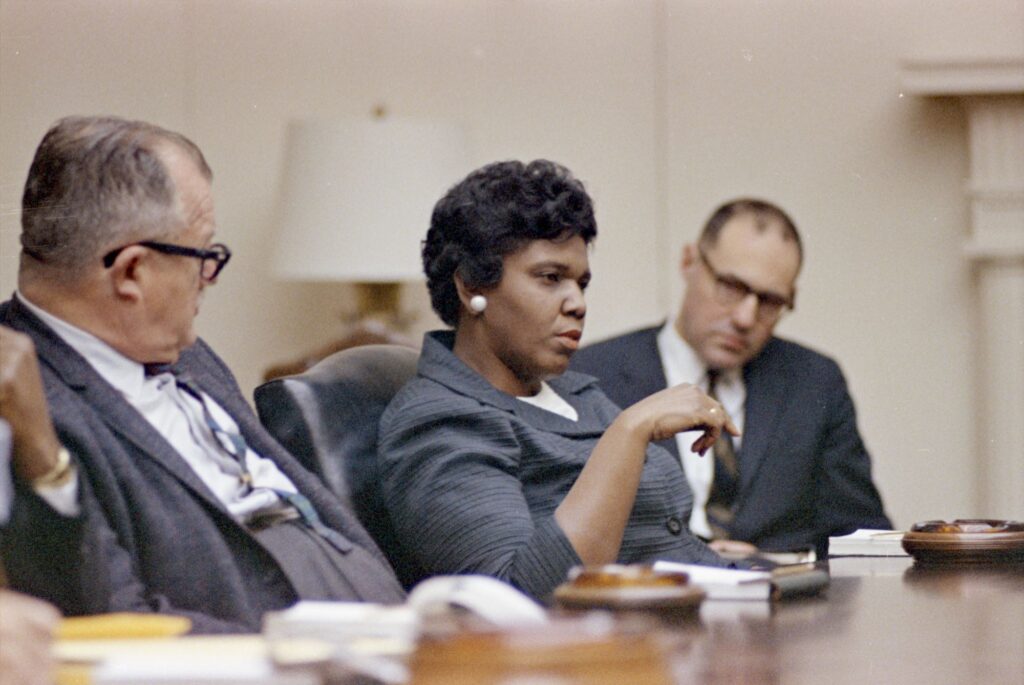
Well, you know, it’s very difficult to make a film about someone when they are not alive. It’s not like you can follow them around doing things. She’s a political figure, so at first, there’s a ton of footage, but it’s of her being a politician. Her at hearings or her being interviewed, and though we use a lot of it, the challenge really was trying to find things of her when she was younger. She was born in the ’30s, so it’s not like there’s gonna be all this video footage or even Super 8 that you can use, right?
Then, because she was such a guarded person, it’s hard finding archival footage of moments where you see her with her guard down. So, we were able to find stills and these little moments here and there. There were two archival producers, I was doing my own research, my co-producer, associate producer, all of us were just researching and researching, looking for a lot of different things. That’s when we started to employ the animation technique. Thinking about how can we use these stills and images to animate them and have them come to life.
I noticed. Why that style of animation?
So, I worked with this woman named Kelly Gallagher and she has a company, Purple Riot. She works on a lot of documentaries. I really liked the idea of using the archival image of Barbara, so you see her face in these different places. But also kind of having this playful vibe … like: paper with glitter on it and we have confetti and things like that. Kelly does all of the animation by hand, and we really wanted to keep the old school style of stop-motion — again, to keep with the playfulness of it. I wasn’t interested in something too slick … So we decided to utilize that style of stop-motion pretty early on.
How long did it take to make the film, and how hard was it to raise the funding?
It took 5 years to make the film, keeping in mind that there was a pandemic in there. It’s hard to raise money in general but, I will say … I was very fortunate. For two reasons; I got a development grant from Firelight Media in early 2020. And so in that time, when we were all in our houses, I could hire an archivist to just get as much footage as possible.
I spent a lot of 2020 just looking at footage and thinking about the kind of movie I could make. That grant sort of put me down the path of being within the PBS system, and I got ITVS’s Independent Lens fairly early on. So, though there was still a lot more fundraising to do, I was very lucky to get that stuff kind of in the early stages.
I was also lucky because Barbara Jordan is somebody that, though we didn’t know who she was, if you are a boomer, then you were alive when she did that Watergate speech. And there are so, so, so, so many people who love her. So, we could raise money from high net worth individuals who understood that a film about Barbara Jordan was really crucial… I’d say, “Barbara Jordan,” and people immediately would be like, “Oh my god, we miss her, we need her.” So those things really helped.
It’s always hard to raise money for a movie. And, you know, the archival is extremely expensive. It was really three times more expensive than we thought it was gonna be. We’re still kind of raising money. We want the archival to be cleared in perpetuity so we can release the film again whenever we want. … That’s what we’re raising money for now, but, yeah, it’s a challenge.
There are a ton of interviews in this film from all different types of people. You must’ve had some that didn’t make it in so how did you decide what interviews to include and which to not?
I did not do more. Everybody that I interviewed is in the film. I didn’t start doing my first interview until 2022, maybe 2023. The reason for that was I made other things simultaneously, too. But I really wanted to research and have a real understanding of the kind of film that I wanted to make. For example, when I was watching all of that archival, there was a moment where I thought, oh, I’m gonna make a film like the Amy Winehouse documentary — which is all archival. No on-camera interviews, all audio interviews.
Then I realized some of the limitations around archival. I realized, okay, I’m gonna have to do sit-down interviews. I came up with a set of rules where it was: people who knew her and had a significant experience with her that would be featured in the film. Or it’s Texas politicians who could speak about her and her legacy and could make sort of politics kind of clear. So that really helped limit the number of people
We brought on an executive producer, Tyrone Dixon, who’s a professor and a filmmaker at Texas Southern University in Houston, where Barbara Jordan went, and where her archives are. The Houston piece was a really important piece to unlock, because that’s really kind of her family and, you know, Black communities can be very tough to get inside of if they don’t know you. I’m Black, so obviously that gives me a leg up. But still, I don’t live in Houston. They don’t know who I am.
So, having Tyrone, who was born and raised in Houston, come onto the project really opened a lot of doors.
Also, every time you interview somebody, it’s very expensive. So you have to be very mindful of who you’re interviewing.
Given all that is happening today, do you feel this movie is coming out at the perfect time? And did you plan it that way?
I mean, we didn’t plan it. But a theme of the film that we always kind of kept returning to was this notion of the cyclical nature of history. We’ve been here before, we’ll be here again …
I think what’s unique about this moment … is a lot of people, particularly young people, have very little respect for politicians. Because of that, I’d really love for people to see this film. Because Barbara Jordan is somebody worthy of a lot of respect.You really see all that she does, and how… and it just reminds people of a time when politicians could communicate across parties. … Trump being so off the rails is creating a very strange, cross-party sense of bonding. I feel like there is a weird, unique moment for people to have conversations across party lines. Obviously, Trump [presents] a unique set of circumstances, but there are some things that are not that unique … There’ll always be a need for the words of Barbara Jordan until this country makes some real significant change.